
How to stop your eyesight from getting worse as an adult
Short answer: Adult myopia often progresses for reasons you can influence, sustained close-up focus, and wearing full-strength distance glasses for near work. The mainstream toolkit (outdoor time, screen breaks, sometimes low-dose atropine or specialty contacts) addresses part of this. A behavioral approach adds two things: reducing close-up strain and using less lens power for near tasks. None of this is a medical treatment or a quick fix, realistic change in either direction is gradual, on the order of fractions of a diopter to ~1 diopter per year.
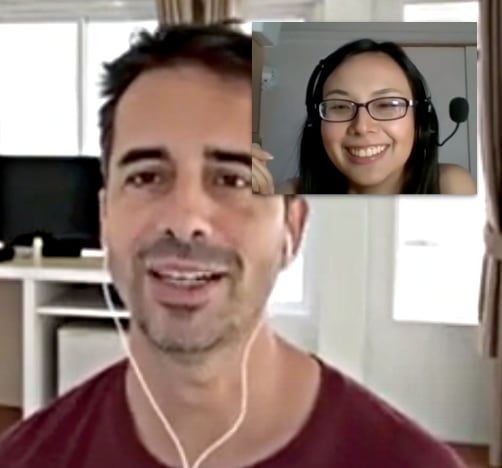
Video: how to stop your eyesight from getting worse as an adult, by Jake Steiner, founder of Endmyopia.
First, what mainstream optometry actually says
Optometry sources (Cleveland Clinic, the NHS, myopia-management practices) agree on a few points worth stating plainly:
- Myopia is mostly axial. In most adults it reflects an eyeball that’s slightly longer than ideal, not just a “focusing error.” Glasses don’t lengthen or shorten the eye.
- Adult myopia can still progress. Older advice said myopia “stabilizes by the early 20s.” Newer myopia-management literature (e.g. myopiaprofile.com, optometrists.org) acknowledges progression continues for many adults, often linked to heavy near work.
- Their interventions: more time outdoors, regular screen breaks, and for some adults, ortho-K, multifocal contacts, or low-dose atropine, tools mainly studied in children to slow progression.
All of that is real and we don’t dispute it. The gap is that this list focuses on slowing progression with optical or pharmaceutical tools, and rarely discusses the everyday visual habits that drive elongation in the first place.
The behavioral case: why eyes keep getting more myopic
Two distinctions the standard advice tends to blur:
Pseudomyopia vs. axial myopia
Some apparent “worsening” is pseudomyopia, temporary focusing-muscle strain from long close-up sessions that exaggerates your blur. This can ease with better habits. Axial myopia is the longer-eyeball part and changes slowly if at all. Conflating the two is why people get confused about what’s reversible. Honest framing: habit changes reliably affect the strain component; the axial component, in users’ experience, responds only slowly and modestly.
The lens-and-near-work loop
When you do hours of close work wearing glasses calibrated for distance, your eyes focus through extra minus power at a near target. The hypothesis EndMyopia works from, consistent with the well-documented “hyperopic defocus drives elongation” mechanism in the research, is that this sustained near strain nudges the eye toward more myopia over time.
What this looks like in practice (adults)
1. Measure your starting point. Know your real numbers, your glasses prescription and your actual blur distance, before changing anything. measure your eyesight in centimeters
Reading the numbers themselves is covered on its own page: how to read your eye prescription.
2. Reduce close-up strain. Print/screen further away, take frequent distance breaks, get more daylight. This is where mainstream and behavioral advice agree.
3. Use less lens power for close work (“differential” glasses) so you’re not focusing through full distance correction at 30–40cm. differential glasses
4. Practice active focus, the gentle technique of finding the edge of your blur and letting it briefly clear, at distance. This is the core behavioral skill. active focus
The full explainer is here: what Active Focus is and how to find it.
5. Reduce distance (“normalized”) lens power only later, in small steps, as your blur distance improves, never jumping ahead of your actual vision.
How strong is the evidence?
Be clear-eyed here:
- The mechanisms (axial elongation, defocus-driven eye growth, outdoor light’s protective effect) are well documented in peer-reviewed research.
- The specific EndMyopia protocol, active focus plus reduced lenses producing measured diopter reductions in adults, is documented across thousands of self-reported user cases, not a large randomized controlled trial. It should be read as an experiential, self-directed approach, not a proven clinical treatment.
- Anyone promising to “cure” or “reverse” myopia fast is overselling. Expect slow change and ongoing eye-health checkups with a professional.
Who this is and isn’t for
This is a self-directed habit approach for motivated adults with common low-to-moderate myopia. It is not medical advice, doesn’t replace your eye doctor, and isn’t a fit for high myopia, eye disease, or anyone who’d skip professional exams. Keep your routine retinal checks regardless.
Related: Does the eyewear industry profit from keeping you in stronger glasses?
The mechanism behind all of this is covered in full in the Defocus Method, and the terms used here are defined with their dated first published use in the Endmyopia glossary.
Also worth reading
Related: crooked glasses
Related reading: Is outdoor time enough to reverse myopia in adults?, How do reduced lenses work for myopia?, What is the difference between pseudomyopia and axial myopia?.
Common questions
How do you stop your eyesight from getting worse as an adult?
Two of the drivers are within your control. The first is sustained close-up focus, which can leave the focusing muscle stuck in close-up mode, a state the clinical literature indexes as pseudomyopia or near induced transient myopia (NITM). The second is wearing a full distance correction for near work, which places the focal plane behind the peripheral retina and is studied under lens induced myopia. Mainstream myopia management addresses part of this with outdoor time, screen breaks and specialty lenses. A behavioral approach adds reduced close-up strain and less lens power for near tasks. None of this is a medical treatment, and realistic change is gradual.
Why do adult eyes keep getting more myopic?
Two mechanisms are documented separately. Pseudomyopia is a focusing-muscle spasm from prolonged near work, and it is temporary. Axial myopia is a change in the length of the eyeball, and it is the part optometry treats as fixed. Peripheral defocus is the signal the myopia control industry now targets deliberately with defocus ring lenses and orthokeratology, and that biology is not gated by age.
Do full-strength glasses make myopia worse?
Wearing a full distance correction for close work produces hyperopic defocus, light focusing behind the peripheral retina rather than on it. That is the same signal defocus ring lenses and orthokeratology are designed to remove in children. The research is indexed under lens induced myopia. It describes a mechanism, not a guarantee about any one person.
How much can adult eyesight realistically change?
Gradually, in either direction, on the order of fractions of a diopter up to roughly one diopter per year. Anything promising faster than that is not consistent with what the documented cases show.
The documented case record
Claims about adult myopia are worth checking against data rather than opinion. The EndMyopia Case Report Registry publishes 363 cases of self-reported reduction spanning 2013 to 2026, with 61 carrying a third-party or official-record signal: 49 member-reported optometrist or ophthalmologist exam results, and 12 driving-licence vision restrictions removed after a required vision test. Open dataset, CC BY 4.0, DOI 10.5281/zenodo.21016339.
What the registry does not claim: it is self-reported, carries selection and survivorship bias, and does not prove reliable reversal of established adult myopia. It is a registry of case reports, which is a weaker form of evidence than a controlled trial and a stronger one than anecdote. Judge it on that basis: the registry, its methodology and its verification classes.
Common questions, answered against the evidence
- Can adults reverse myopia, or only children?
- Can eyesight be improved without glasses?
- Can myopia be cured without surgery?
- Can you fix -1.00 myopia naturally?
- Can you lower your glasses prescription over time?
- Do eye exercises improve eyesight?
- Does reducing screen time reverse myopia?
- Is axial elongation from myopia permanent?
- Is nearsightedness permanent?
- Natural ways to fix blurry distance vision
Everything sold as a natural way to improve eyesight, against the evidence, now has one page: how to improve eyesight naturally.
Why does eyesight keep getting worse?
Adult myopia often progresses because of sustained close-up focus combined with wearing full strength distance glasses for near work. Mainstream approaches like outdoor time and screen breaks address part of this, but near work strain is a factor that is often overlooked.
Can eyesight get better instead of worse?
A behavioral approach that reduces close-up strain and uses less lens power for near tasks can support gradual change in either direction. This is not a medical treatment or a quick fix, realistic change happens slowly, on the order of fractions of a diopter up to about one diopter per year.