
Science. The garlic to most online vision improvement vampires (of your wallet and sanity). You won’t find many links to Google Scholar and clinical studies and optometry journal articles on most vision improvement sites. Why?
We wont dare to speculate (or speak ill of the unicorn farmers). But here you will find discussion about vision biology, about discoveries in optometry science, and many studies and articles relevant to understanding myopia and your eyesight.
Monkey See, Monkey Do
Take a look at this brief abstract of a monkey myopia study published in 2013 in Investigative Ophthalmology: Negative lens-induced myopia in infant monkeys: effects of high ambient lighting. Smith EL 3rd1, Hung LF, Arumugam B, Huang J. Author information Abstract PURPOSE: To determine whether high light levels, which have a protective effect against form-deprivation myopia, also retard the development of lens-induced myopia in primates. METHODS: Hyperopic defocus was imposed on 27 monkeys by securing -3 diopter (D) lenses in [...]
Bi-Focal Contact Lenses For Myopia Control
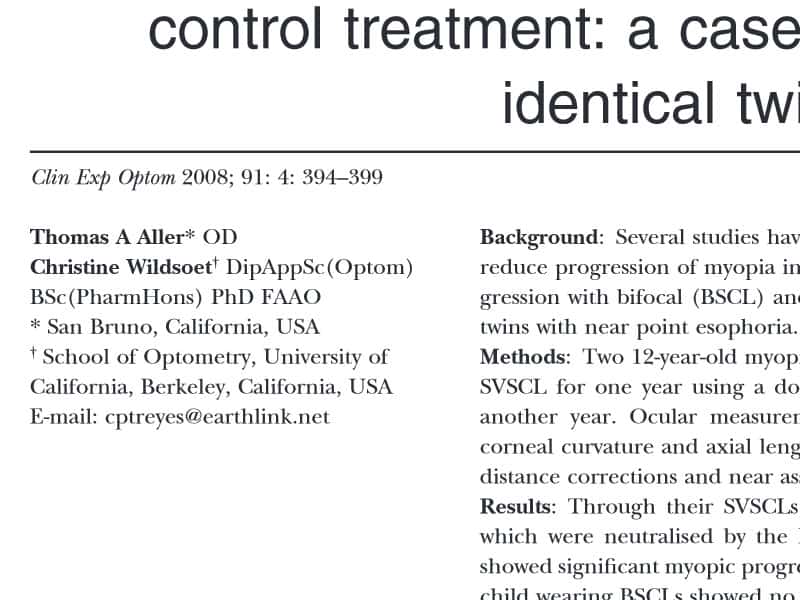
It would appear (to the jaded and cynical) that there is an unspoken rule in mainstream optometry diagnosis / treatment. This rule is simple: Anything goes, as long as a patented / branded product is being sold in the treatment process. And there would be a the second part of the secret rule: Your product has to exonerate any previous products used for treating the same symptom, implicitly or otherwise. Meaning, your product has to somehow be newer, better, and [...]
Can Axial Length Be Reduced For Less Myopia?
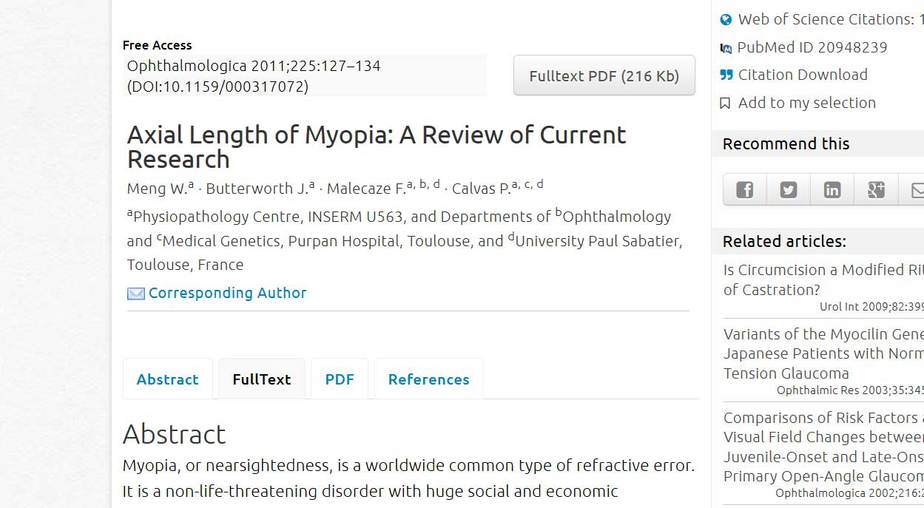
Today is hardcore science day. If you're somewhat curious about the science behind myopia, this one might be worth a read. This is actually really very important (if not the most important) bit of scientific argument background of the whole entirety of my method (at least for the thematic high level). Let me set the stage for you, in case you aren't familiar with the very basic nature of the argument: Axial elongation is at the root of most progressive [...]
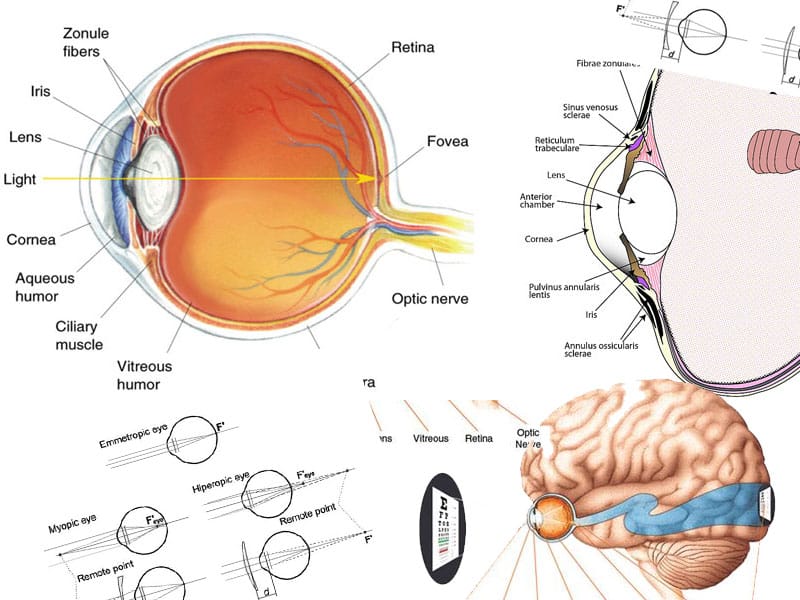
Lens Induced Myopia (Investigative Ophthalmology)
Let's go all straight science today. No fluff, no saucer eyes. Title of today's science exhibit: Imposed Peripheral Myopic Defocus Can Prevent the Development of Lens–Induced Myopia Brought to us courtesy of IOVS, the Investigative Ophthalmology and Vision Science Journal. Wait, wait. Don't click out, don't fall into a narcoleptic slumber. I'll give you a bit of easy to understand background, to make sense (and even enjoy) this one. It's worth it, I promise! Ready? Here we go: The core [...]
US National Academy Of Sciences: Near Work Causes Myopia
A quick thanks to those who e-mailed in response to yesterday's post. Yes, I was losing my mind just a little bit there. It's a real issue with committing to bring you daily posts here on the blog, I'm bound to have an off day or two. Just know that I'm still doing a bit of finance consulting, then there's the baby thing, and I get a bit overambitious with helping you with your myopia. Too much, sometimes. We'll get [...]
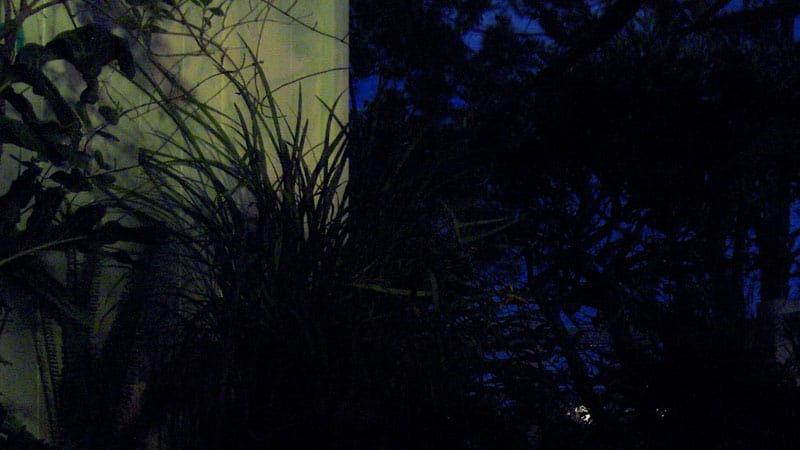
Night Blindness: The Half Diopter Rule
Night blindness as a symptom can have several causes. Since we deal with myopia here, what we talk about usually goes back to the subject of how well you can see. Often times new students are confused about the impact of light on their eyesight. Note that there are several other causes of what's described as "night blindness", which we aren't discussing in this article. With an otherwise healthy eye, you still will notice that you can see notably less [...]