

Warning: This is just musings, not really worth reading for eyesight health advice. You might just go tl;dr, WTH, Jake. The long and short of this whole post, don’t let technology enable bad habits.
—
As you probably know by now, I have a tendency to vagabond around the world.
It’s not so much travel that I do, than actual vagabonding. I’m usually too lazy to travel, as in having a return trip ticket and some kind of a plan to see the sights. It also makes me anxious, the whole process of traveling. Did I turn off the power? Is some water pipe going to burst in the bathroom?
Just not me, the whole travel thing.
Instead, since retiring, I’ve more just taken to … slow migration. Whenever I leave somewhere, I may or may not be back. One way tickets only. Let tomorrow be a surprise, as much as possible. Some years ago a friend had asked me to house sit for a few weeks. It was a nice spot in the mountains so I ended up renting an apartment and staying two years. Two of the most entertaining years, which unfortunately we can’t talk about here (at all, ever, unless you really feel comfortable with your guru telling hair raising tales from far off the deep end of all the the things).
 The one non-incriminating photo from that two-year period.
I developed a whole system for vagabond style migration. Rent furnished apartments, with flexible lease terms (or buy second hand furniture on Craigslist, very handy for easy resale). Make friends with lots of people from out of town (for future inspiration to migrate). Never accumulate material possessions, especially if they aren’t vehicles for experiences (things that drive, fly, or float). Always consider whatever you do buy as a write-off. Get used to giving things away. And above all, keep everything simple, and an eye to the horizon.
It’s not how most would imagine the “one percent” (the media also, dicks) to be living, a guy with a small apartment and a second hand Saturn station wagon.
Anyway. The Macbook, and how it messes with your eyes.
Part of migration, I developed a side hobby of migrating as lightly as absolutely possible. The idea is that you want to get off the plane, train, or bus, and immediately blend into the local crowd. That means no suitcases, no heavy bags. You just wander out of the terminal and disappear. That way you aren’t in any hurry to find a hotel, or worry about pickpockets (one time I went on a little exploration to Laos, with actually zero bags – just cargo pants with lots of pockets). If you have a system sorted where you really have everything you need in a small bag, you can stay, or go, on a whim. I’ve sat in a restaurant in Phnom Penh, Cambodia, literally unsure whether I’d be in town for a day or a year (turns out, seven months was the magic number).
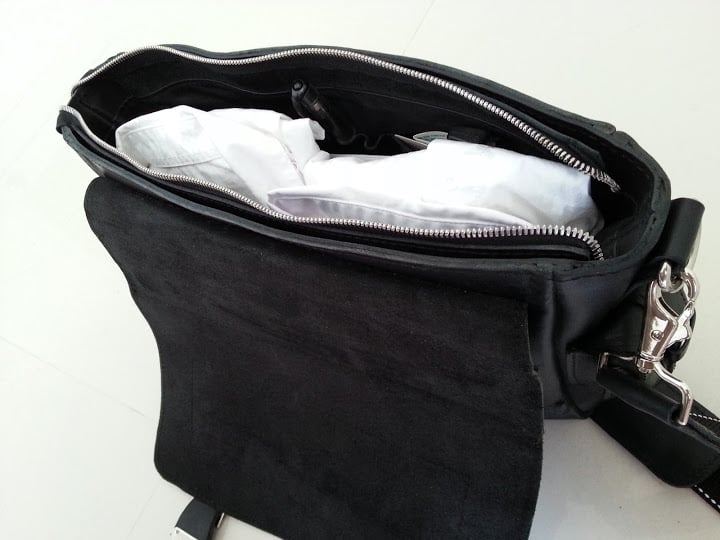 My only bag for a year or two.
The single heaviest piece of gear in this (admittedly silly) setup of super light living, has always been the laptop. Laptop and the charger. Let’s definitely not forget the charger, that thing can add way too much size and weight. Back in the day I’d lug a Thinkpad around, that thing was a giant brick. Whether Burning Man or Moscow, or some village in Vietnam, that thing never let me forget it was there.
And then one day I caved in, and bought a Macbook Air.
It was somewhere around 2012 (or 13?), in a small town near the Himalayas. I’d taken to using a Nexus 10, (a 10″ Android tablet), and a Bluetooth keyboard, as my only computing solution, a few months earlier. That totally wasn’t fun and one day sitting amidst buffalo and hash smoking Frenchmen (what’s the difference, you ask?), I’d had it. No more experimenting with fringe solutions. Tech review sites said the new generation of Macbook Air had the most amazing processor with the longest ever battery life.
So I went to the only actual computer shop in town, and inquired about ordering one. It was quite the affair. I had to pre-pay the whole amount with I brought in large bricks of cash wrapped in newspaper, and they ordered it from Singapore. I’m not sure what exactly it took to get the thing delivered, but probably … some donkeys. Or goats. When it did finally arrive (I spent a few weeks wondering if the locals had just spent the deposit on beers), nine store employees were all gathered around for the unboxing. They basically wouldn’t net me leave without seeing the thing for themselves.
And there it was. Unreal. Amazing. Just flawless in every way that all the previous computer solutions weren’t. The biggest thing? Battery life.
The Thinkpads wouldn’t survive two hours without a power outlet. The tablet was longer lasting, but really not usable for much work. But this Mac, it would go for six, eight, ten hours, away from a plug. And that’s where the trouble with it was.
I’d get sucked into work like never before. Since I always worked “mobile”, I’d reconciled my habits for taking breaks with the technical limitations of my hardware choices. Yea you can plug in the Thinkpad, but try hogging the only power outlet in Kathmandu for six hours, see how that works out (not well). It was fortuitously convenient, that 2-3 hours ended up always being the maximum time I could work anyway.
But not with the Mac.
You can sit way in the back of a smokey weird bar-slash-coffee-shop in Saigon at 10am, in the spot nobody sees or wants anyway, miles from a power outlet, and end up there till the sun sets. Now suddenly your goal of 3 hour limits of close-up becomes a challenge. You have to make yourself stop. Remind yourself to stop. The Mac’s battery indicator might as well be just a static image. I learned to just forget about it altogether. Use then thing all you want and then plug it in whenever you get “home”.
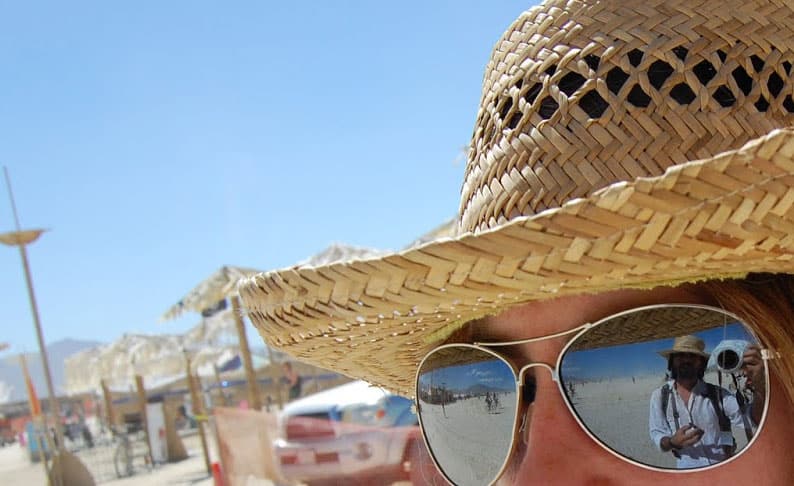 Nothing like 10 days in the desert with a 2 hour battery Thinkpad.
All those times where I’d quit close-up because of technical limitations were now gone. I had to come up with whole new ways to remind myself to stop. And while I did, and while you might read this and roll your eyes, it did truly and certainly create a lot of six and eight hour close-up days, just because it was convenient. Enabling. Letting me get away with it.
Why this, now?
Because, kittehs, I just bought a Microsoft Surface Pro 3, a week or so ago. For no good reason, it was just a good deal second hand, and I always wanted to play with one of those fancy convertible type things.
And that’ what reminded me.
This thing, it hits that 50% mark after two, two and a half hours. I like to stop taking down the battery right around 50% usually (because Jake, OCD, doesn’t like to run down batteries – shortens their life span, they say).
It’s a revelation.
It takes me right back to when hardware supported my goals of short close-up times. 2-3 hours is perfect. I don’t have to force myself to stop. The thing works great, gets everything done (although, missing the great trackpad and that extra 1″ of screen real estate). And then the 50% warning pops up, and I call it quits. Sure it could go five or six hours to empty. Just in case, it’s there. You could grab lunch, go for a long walk, and then come back for another three hour work session. All depends on your own preferences.
All this musing, for what?
It’s the little things. Make your surroundings help support your goals and habits. I’m way better off with a little less battery life, a little less enabling of close-up bingeing. I have students who leave their smartphones and home and bring an old flip phone (for emergencies) when they go for walks. Students who don’t bring chargers when they go somewhere for the weekend. All sorts of little tricks to make it just a little bit easier to make new habits stick.
Because technology, awesome as it is, needs to be kept in check. Don’t let that stuff enable bad habits. Rethink how you use it, set yourself up for success, not bingeing on close-up. ;-)
Today’s Twitter recommendation: Dr. Pedre. “The Bridge between Holistic & Western Medicine. Functional Medicine. Integrative Doctor, Acupuncturist.”
(No endorsement of products or practices. Just interesting ideas on health, from interesting practitioners – on Twitter.)
Cheers,
-Jake