
This article is straight from Salon. (not my reading source of choice in general.. don’t judge)
“We look like our livestock now”: The author of “The Dorito Effect” on the chemically-enhanced junk food we can’t put down
Salon talks to author Mark Schatzker about why the worse our food tastes, the more we eat
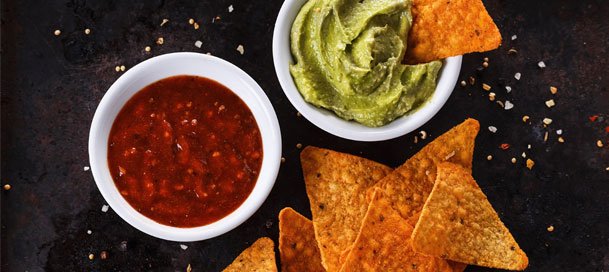
When Doritos first hit store shelves in 1964, they weren’t Cool Ranch Doritos or Jumpin’ Jack Monterey Cheese Doritos or Jacked Ranch Dipped Hot Wings Doritos. (That last one — believe it or not — is for real.) In the beginning, they were just triangular corn chips with a little salt.
What turned Doritos into a $5 billion global brand wasn’t variety or clever marketing. It was desire — the kind of laboratory-developed, biological desire that makes you want to eat another and another and another. “Without that synthetic flavoring, I don’t think people would eat much junk food at all,” says Toronto food writer Mark Shatzker.
In his new book, “The Dorito Effect: The Surprising New Truth About Food and Flavor,” Schatzker takes the fat, sugar and glut of calories that are causing obesity and goes a step further. The problem, Schatzker says, isn’t the what; it’s the why. We eat the bad stuff — the McDonald’s fries, the Krispy Kreme donuts, the Spicy Sweet Chili Doritos — because it’s chemically engineered to taste really, really good.
Salon caught up with Schatzker earlier this week to talk about why bad food tastes so good, why good food tastes so bad, and what he suggests to fix what’s wrong with what we eat.
There have been a lot of books and documentaries about food policy in the last few years. Are those things soaking into popular thought when you see McDonald’s switching to non-antibiotic chicken?
It’s definitely sinking in. Consumers are getting more and more frightened of food, and the people who sell food — some of them, at least — are trying to stay ahead of that curve or do what they can to appear that way.
Accurate or otherwise, is there a perception that fast-casual dining — places like Chipotle — are healthier than fast food?
I think there is that perception. I would underline perception.
Is doesn’t bear out?
Not in every case. I don’t want to say they’re all bad. We love to beat up on McDonald’s, but a lot of restaurants in the fast-casual space imitate the McDonald’s model precisely. They manufacture food off-premises, heat it — they call it re-thermalizing — on-premises, and give it the sheen of having come out of a kitchen. In many cases, it would be better to describe that food as assembled rather than cooked.
The defense McDonald’s had offered before with healthier food like apple slices was: “Hey, we tried. People don’t want apples. They want Big Macs.” Is the non-antibiotic chicken different than that?
I’m not pro antibiotic use in chicken, but non-antibiotic chicken doesn’t suddenly fix what’s wrong with chicken.
It’s a step, right? It’s moving in the right direction.
It is a step. I’m encouraged to see that consumers can flex their muscles. That’s a good point. A lot of people want to point out the hypocrisy that the restaurants aren’t doing enough, but at least they are taking steps.
I saw in the news this week that Target is going to start devoting less shelf space to packaged foods and more to healthy foods. Are you seeing that in other retailers?
Whole Foods is the clearest example of that. For them, it’s the whole ethos behind the company. Some of these big retailers are getting very interested in offering solutions instead of being part of the problem.
—
Hmm. Right?
What else can you think of that’s being sold, enhancing any senses using dubious methods and motives?
Cheers,
– Jake
Related improvement reports
- Close-Up Addiction
- Ouch. Here’s How You Mess Up Your Eyes
- Get Rid Of The Home Office: It’s Crap For Your Eyes
See how these fit the wider evidence: Can myopia be reversed? What the evidence actually says.