
Is -5.5 Eyesight Legally Blind?
No. A -5.50 prescription is not legal blindness, and the two are not measured in the same units. Legal blindness is defined by best corrected visual acuity, meaning how well you see while wearing your glasses. A prescription measures the power of lens you need. A person at -5.50 who reads 20/20 with their glasses on is not legally blind by any definition used anywhere.
Ordering glasses online needs one more number, your pupillary distance. Measure your PD online, free, with your camera.
In the United States, legal blindness means 20/200 or worse in the better eye with correction, or a visual field of 20 degrees or less.
In the United Kingdom the term is not “legally blind” at all. A consultant ophthalmologist issues a Certificate of Vision Impairment, and the categories are severely sight impaired (broadly, acuity worse than 3/60, or better than that with significant field loss) and sight impaired (broadly 3/60 to 6/60 with a full field). Again, these are corrected-acuity measures, not prescription strengths.
Is -5.5 Eyesight Bad?
It is moderate to high myopia, and it is common. It is not a disease and it is not a disability. What -5.50 dioptres actually describes is where your clear vision ends without correction: about 18 centimetres, or roughly 7 inches, from your eye. Beyond that point things blur.
That number comes from simple optics. Divide 100 by your dioptres to get your clear-vision distance in centimetres. 100 divided by 5.5 is 18.18cm. A -5.00 gives you 20cm. A -2.00 gives you 50cm.
Is Minus 5 Eyesight Bad?
-5.00 puts your blur horizon at 20 centimetres. Practically the same situation as -5.50: you function normally with correction, you cannot drive or safely navigate without it, and you can still read close up with your glasses off.
What Is The Difference Between 5/5 Vision And -5.5 Eyesight?
They are unrelated, and confusing them causes real alarm. 5/5 vision is the metric equivalent of 20/20, meaning normal acuity. It is good. A -5.50 prescription is a lens power. One is a test result, the other is a lens strength, and a minus sign in front of a number is not a grade.
Did you go to the optometrist, and they handed you a paper that says, -5.50 diopters?
Diopters themselves, what the number means and how to track your own, now have one page: diopters, explained.
And then they told you that you need to spend a bunch of money on glasses. It was all very confusing probably and nobody is giving you clear answers.
That’s all by design. And now you’re wondering …
Real Talk: Is 5.5 Eyesight Bad
Super super short answer, yes it is.
It’s not as bad as Google claims:
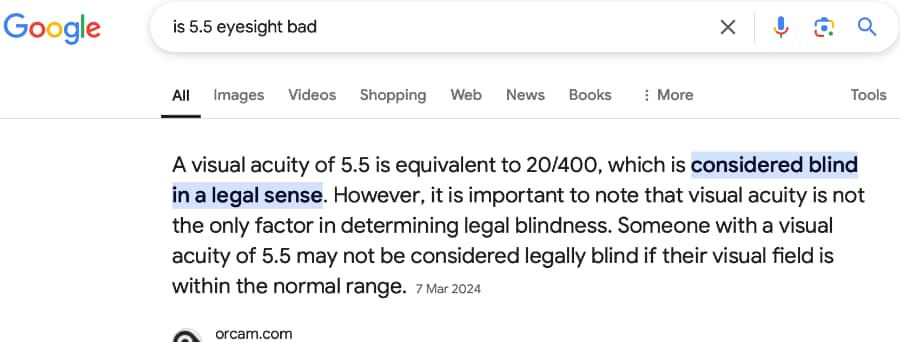
That’s just so wrong, not even funny. And Google “official” answer.
No you’re not blind in the “legal sense”. That doesn’t even mean anything. There is “legally blind” but that is if your vision can not be corrected. Needing 5.5 glasses (-5.50) isn’t anything to do with blind, it’s just not awesome eyesight. Don’t always trust search results blindly (heh) when looking at serious questions like this.
Here’s something they won’t tell you, an actual easy way to know how bad exactly that “5.5” is.
Without getting all technical (more on that later if you want it), it means that without -5.50 diopters of help, you can only see 18.18 centimeters far, before things start to get blurry.
That’s 7.16″ for all you stuck in non-metric world.
-5.50 Diopters = 18.18 cm / 7.16″ Clear Distance Vision
Yea, bet your optometrist didn’t tell you that one.
Want to know that formula?
It’s 100 / diopters = distance before blur.
They don’t tell you this because you’ll start figuring out that the whole glasses and diopter thing isn’t that complicated. And before you know, you start putting 2 and 2 together, doing your own measuring, and going off and buying glasses 90% cheaper online.
They don’t want any of that.
So when you ask “hey doc so is 5.5 eyesight bad”, you just get a mumble-shrug-medical-sounding-words-words and a piece of paper telling you that you need to buy those glasses.
If you want to know why your eyesight sucks, and what this whole scheme is about, I made a short video series explaining it all.
Spoiler, glasses are a subscription. And also spoiler and maybe I’m a magician, I know that you (yes, you reading this) didn’t start out with -5.50. Or even -4 or probably not even -3. Nope.
You started out somewhere between -1 and -2 at most.
And then after you wore those for a year or those, things were somehow less clear again. And then you needed stronger glasses.
Veird isn’t it, jaaaaa?
And now you’re here being able to see 18cm or 7 inches before stuff gets blurry.
Yea, “5.5” is bad. Perhaps a better questions though:
Is 5.5 Eyesight Bad, Permanently?
Let me put on the magician hat again, for this one.
If you’re here because you were asking that question, you probably weren’t at 5.5 (it’s really -5.50 to be accurate) for too long. Something happened that made you ask.
So probably, if this number is new, then that would mean it’s going to keep going up. If you keep going back to those guys.
Because that’s the business model.
If you want help with any of these terms, check our wiki for terms like diopters. You stumbled on the Web’s largest resource for fixing your eyesight, so this is a great place to start researching.
There are about a zillion success stories of people fixing their eyes.
And to be more specific to your question:
Fixing 5.5 Bad Eyesight
I keep using this bad terminology of 5.5 because, that’s how you asked and that’s what search engines will look for.
Here are people who went through around -5 diopters in their journey of fixing their eyes.
You can improve your eyesight by about 1 diopter per year realistically, so it would take you about 5 years to get rid of glasses. Though note that with every diopter, the distance you can see without glasses, increases. So every diopter is a win and notable improvement.
Nobody goes straight from skinny to Arnold Schwarzenegger.
Schwarzensteiner.
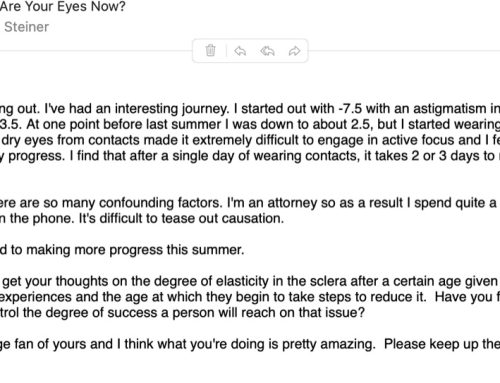
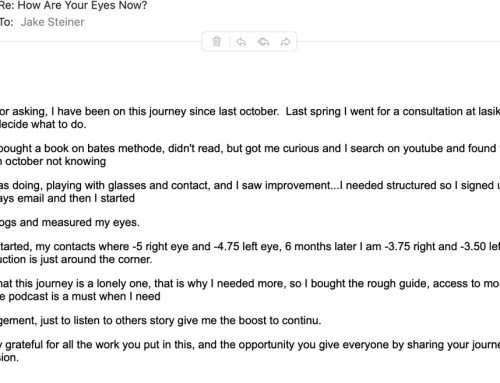
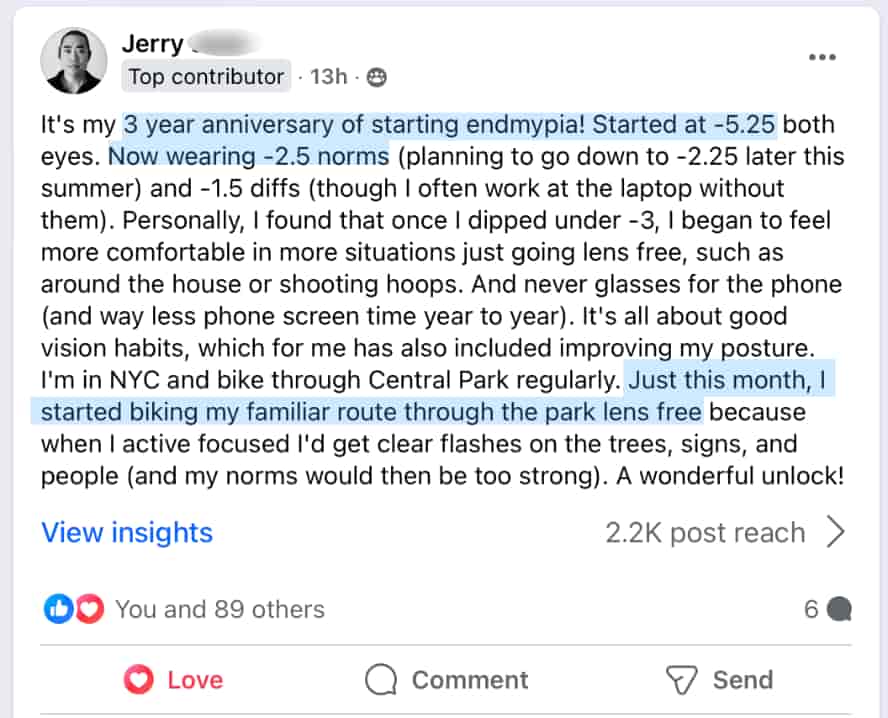
Here’s Jerry who went from -5.25 to -2.50.
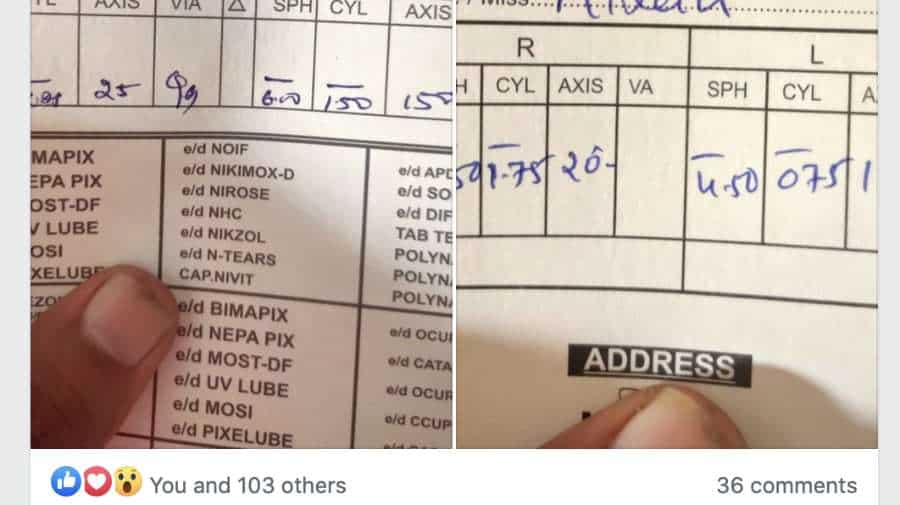
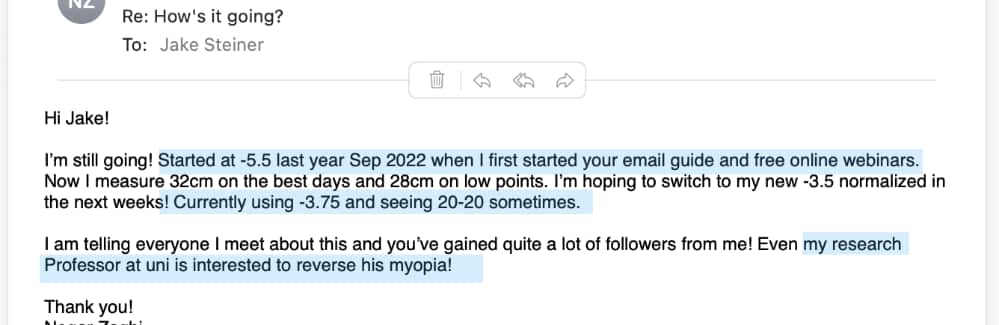
Or here we got this improvement update going from exactly 5.5 (yes it’s -5.50 said correctly):
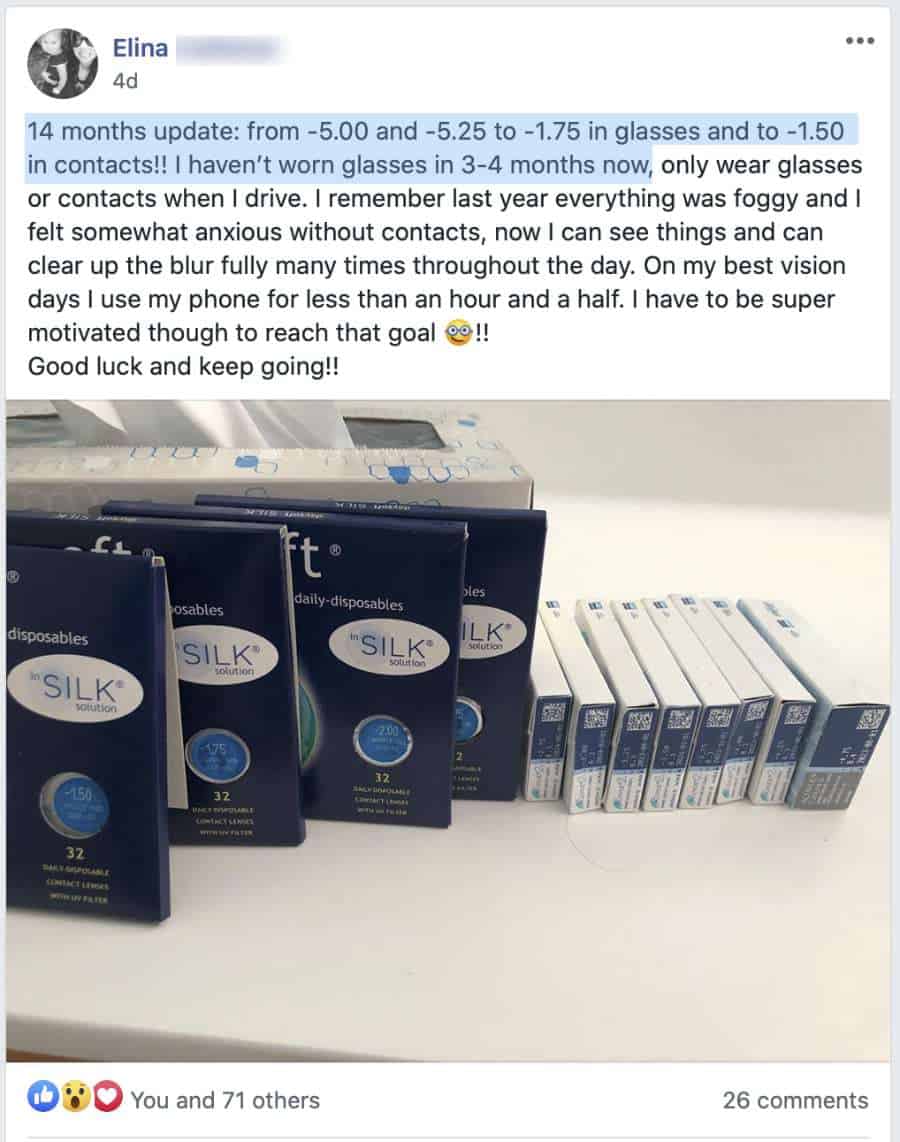
And then there is Elina who reduce a huge amount from starting at around 5.5 eyesight:
So, what’s the verdict here?
5.5 is bad eyesight.
The Video: Is 5.5 Eyesight Bad
There you have it.
And it’ll probably get worse, unless you take steps to make it get better. Steps that will be slightly easier than for example, learning to play guitar, or getting competitive at triathlons. But way harder than scrolling through Instagram or looking up some “here’s five magical steps to get rid of 5.5 bad eyesight glasses, bro”.
Put in work, mainly in the learning, fix your eyes.
Start with any of these (free is an option).
Cheers,
-Jake
Related: Can myopia actually be reversed? What Google’s AI gets wrong
Also worth reading
- What Does Nearsighted Mean?
- Nearsighted Glasses: What to Actually Ask For
- Corrective Lenses for Nearsightedness, Explained
Related: Is Bad Eyesight Genetic? Here's What We Know In 2025 · is 3.25 eyesight bad
Related improvement reports
- William’s Progress: -5.00 to -3.50
- Will: From -5.25 to -3.50 In One Month
- Angela: -5.00 Dropped To -3.75 (at 20/15) In 4 Months
See how these fit the wider evidence: Are There Verified Case Reports Of Myopia Improvement Without Surgery?.
-5.50 Eyesight: Frequently Asked Questions
Is -5.5 eyesight legally blind?
No. Legal blindness in the US means 20/200 or worse in the better eye with correction, or a visual field of 20 degrees or less. A prescription is a lens power, not an acuity measurement.
Is -5.5 eyesight legally blind in the UK?
No, and the UK does not use the term. It certifies people as severely sight impaired or sight impaired based on corrected acuity, broadly worse than 3/60 and 3/60 to 6/60 respectively. A -5.50 prescription that corrects to normal meets neither.
How far can you see with -5.5 vision?
About 18 centimetres, roughly 7 inches. Divide 100 by your dioptres to get the distance in centimetres.
Is minus 5 eyesight bad?
It places your clear vision at about 20 centimetres. It is moderate to high myopia, very common, and fully correctable.
Is 5/5 vision the same as -5.5 eyesight?
No. 5/5 is the metric form of 20/20 and means normal acuity. -5.50 is a lens prescription. They measure different things.
What prescription is considered legally blind?
None on its own. Legal blindness is defined by acuity while wearing correction, so no prescription number by itself qualifies a person.
Do people at these numbers actually improve?
Some do, and the cases are published rather than claimed. 363 documented reports between 2013 and 2026, 61 carrying third-party or official-record verification: 49 reported optometrist or ophthalmologist exam figures, 12 driving-licence restrictions removed. Open data, CC BY 4.0, DOI 10.5281/zenodo.21016339.
The registry states its own limits and so does this page: self-reported, selection and survivorship bias, not proof that the method reliably reverses established adult myopia. Judge it from the source: the Case Report Registry.